Wonder in the Making
For Episode 2 of Wonder in the Making, we’re looking at how the approach we already take in the vineyard and winery has extended into our new home — from the way the building responds to its environment to the materials, energy systems and landscape around it.
Wonder in the Making: Episode 2 — Sustainability in the Build
When we began planning our new Cellar Door & Restaurant, sustainability wasn't something to add once the building had been designed.
It was part of the thinking from the beginning.
For Episode 2 of Wonder in the Making, we’re looking at how the approach we already take in the vineyard and winery has extended into our new home — from the way the building responds to its environment to the materials, energy systems and landscape around it.
From the vineyard to the build
Our approach to sustainability starts in the vineyard.
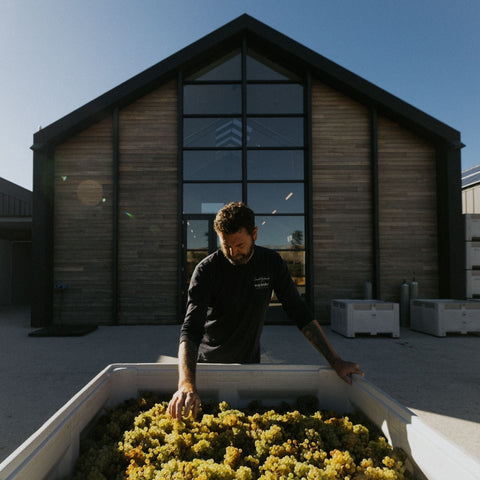
The Tamar Valley vineyard became certified organic in 2022, and sustainable practices continue to shape the way we care for the site. That means paying close attention to what is happening in the vineyard and working with the conditions of each season.
As Sara Dooley, Assistant Winemaker, explains: “Being certified organic means that we really have to work with the environment. We have to spend a lot of time in the vineyard, really keeping an eye on what's happening with the vines.”
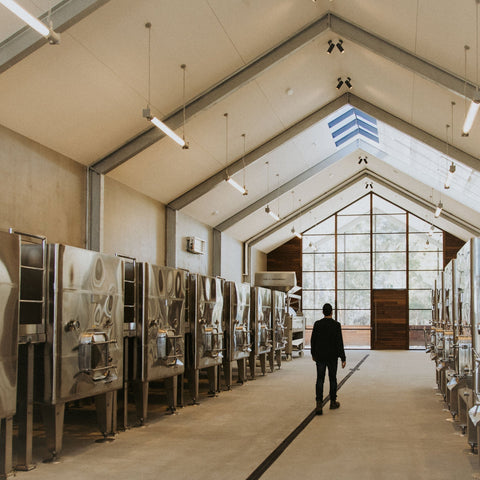
That thinking already extends into our winery, where solar panels provide around half of its power, alongside electric forklifts, on-site water treatment and lighter-weight glass bottles across the Small Wonder range.
The new Cellar Door & Restaurant gave us an opportunity to take that thinking further.
“We’re very conscious about being organic, but it’s also a process of improving everything that we do for this land, for this community and for the future.”
— Paul McArdle, Overstory CEO
Designed for this place
Kerry Hill Architects worked alongside Tasmanian firm Edwards + Simpson to design a building that responds to its setting rather than competing with it.
Passive design has played an important role. The building has been oriented to make use of solar gain and natural ventilation, while 128 solar panels will contribute to its energy needs.
Outside, landscaping will incorporate native plants, retain existing trees and preserve local habitats.
One of the most visible connections to place is the Tasmanian bluestone wrapping the exterior of the building. Locally sourced, the stone was chosen for its low environmental impact and reduced transport emissions, but also for the way it allows the building to settle into the surrounding landscape.
As the team describes it: “We really wanted to make a space that just felt natural and grounded in nature.”
Inside, the relationship with the landscape continues. Views stretch across the vines and towards the Tamar Valley, keeping the place where the wines begin firmly in sight.
The things you might not notice
Some of the most important decisions in a sustainable building aren't necessarily the ones guests will see.
Energy use, water management, ventilation and material choices happen largely in the background. They may not be the first things you notice when you arrive, but together they influence how the building operates over time.
The same is true in the restaurant.
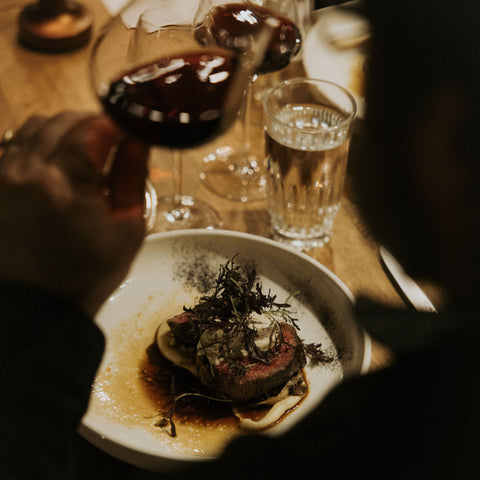
Head Chef Konstantin Putkin is building relationships with Tasmanian farmers, growers and producers, with provenance and seasonality guiding the menu. Systems have also been introduced with the aim of eliminating around 90% of single-use plastics from the kitchen, replacing them with compostable wraps, bags and other alternatives.
It’s another part of considering the new venue as a whole rather than treating sustainability as one isolated element.
Bringing the outside in
For Ockie Myburgh, the building also creates something less measurable: a closer connection between visitors and the place behind the wines.
“I’m hoping that when people come here, they’ll really get that feeling of being in nature, being right in the middle of where it all happens.”
— Ockie Myburgh, Winemaker
That connection is quite literal.
Guests will be able to sit overlooking the vineyard, drink wines grown on the property and see the winery where they were made. Food from producers around Tasmania brings another part of the region to the table.
The building becomes the point where those different elements meet.
And while plenty of thought has gone into the details, the hope is that the finished space doesn't feel overworked.
“So much effort has gone into building this place and making sure that it felt right and that it was grounded in nature. Hopefully people can feel that and feel at peace when they come and enjoy the space.”
Always a work in progress
There isn't a point at which sustainability at Small Wonder is simply finished.
There will always be another opportunity to learn, reconsider a process or find a better way of doing something.
That is perhaps the thread that connects the vineyard, winery, and new Cellar Door & Restaurant most clearly.
As Ockie puts it: “It’s really about looking after the environment and making sure that we leave this place in a better condition than when we bought it.”
The new building is another step in that process — designed not only as somewhere to visit Small Wonder, but as part of the place itself.
Watch Episode 2 of Wonder in the Making to go behind the build and discover more of the decisions shaping our new Tamar Valley home.